
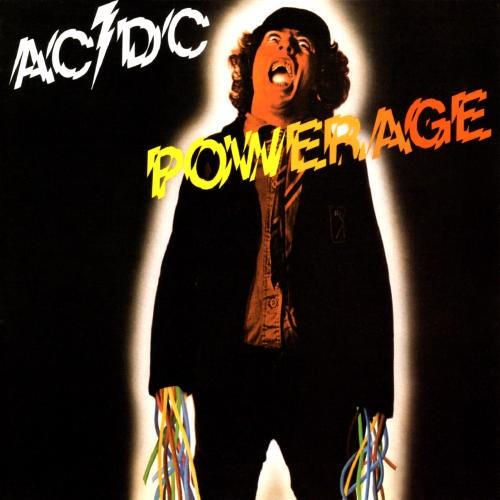
Work on AC/DC’s fourth internationally-released studio album Powerage began in earnest at Sydney’s Albert Studios in January 1978. The sessions, with long-time collaborators Harry Vanda and George Young once again producing were intense: the band would rehearse songs from 8pm to midnight, and track them from midnight to 8am. The intent was to make an album that could stand toe-to-toe with anything recorded by the superstar acts AC/DC were now accustomed to sharing stages with.
“We were happy to stay in the same area as Let There Be Rock because all that stuff was going down so well on stage,” Malcolm Young reflected. “The record company were starting to push us for hit singles, and we were just digging in our heels and going for it.”
That Powerage is the only AC/DC album title not to feature in a chorus speaks to one of its key virtues – subtlety. While the album has its share of full-tilt rockers, one should not forget songs like the reflective and unapologetic Down Payment Blues (with Bon Scott’s iconic line “I know I ain’t doin’ much, but doin’ nothin’ means a lot to me”), the murderous revenge fantasy What’s Next To The Moon, and the sobering Gone Shootin’ – Bon Scott’s pained, poignant love letter to a heroin-addicted girlfriend.
Crucially, though, throughout Powerage, there is always a sense of hope, always a glimpse of blue skies for those knocked down in the gutter, not least within gambling parable Sin City at the album’s core, a defiant ‘Do your worst, cunts!’ roar in the face of stacked odds and an inevitable beatdown.
On this album, AC/DC exhibit a sense of discipline, maturity and reined-in power that comes with inner confidence and belief in the source material. In many ways, this was the band’s coming of age.
Their record label Atlantic Records did not necessarily see it this way. They had been put off by the band for years. They found them to be unmarketable, unlikely to ever come up with a hit, and they really didn’t know what to do with them. But one day they got a bright idea.
Shortly after, some of the Atlantic executives visited AC/DC in the studio as the band were making Powerage. Atlantic had decided to put its foot down, and the band was told that they had to come up with a ballad for the album. All the current bands at the time were climbing the charts with rock ballads and Atlantic felt it would be stupid not to get in on that. This was AC/DC’s chance to redeem themselves in the eyes of the label and finally see some chart success, and the label’s chance to get something back for their investment.
The band were flabbergasted. They told the record company that they honestly did not know how to make ballads. They said they wouldn’t know even how to begin crafting such a song. The executives were not concerned. They had encountered such issues before and had a solution ready: they would bring in an accomplished A&R person to sit down with the band to help them out. This person was quickly dubbed ‘the expert’ by Bon Scott – a moniker that the entire band adopted in short order. The expert said all they needed to do was think of the last time a girlfriend they had done them wrong and then just write about it.
The expert also said that the guitar players should not play over the vocals during the verses-to let the vocals be the center point of the song. This, they said, would constitute a proper rock ballad.
Incredibly, the band gave it a shot. Malcolm Young – rhythm guitarist and the de facto leader of the band – decided it couldn’t hurt to give it a try this once. Primarily, he may have seen it as a challenge. Whatever Malcolm decided, the band would do.
A few weeks later, the producers visited the studio to listen to the band’s first proper ballad. They all sat down, and people sat in silence as the song played over the studio monitors. When the song ended the Atlantic executives just looked at each other and shook their heads. They told the band to carry on with their album and walked out. Needless to say, the song was never used.
Interestingly, the band had already come very close to the ballad format with their track Ride On, which was included on the Dirty Deeds Done Dirt Cheap album (released in Australia/Europe in 1976; first US release in 1981). The track is primarily a melancholic blues that retains its slow pacing and sombre mood throughout. It features reflective lyrics from Bon Scott concerning a man regretfully remembering the mistakes he made in a relationship due to his drinking, delivered in a tasteful, restrained, and soulful manner. The song is very atypical for AC/DC, but has gone on to become a huge fan favourite. If the label wanted a ballad from AC/DC, this song shows that this might have been possible as long as the band could do it on their own terms.
One of these days
I’m gonna change my evil ways
‘Till then I’ll just keep riding on
Facebook Comments